
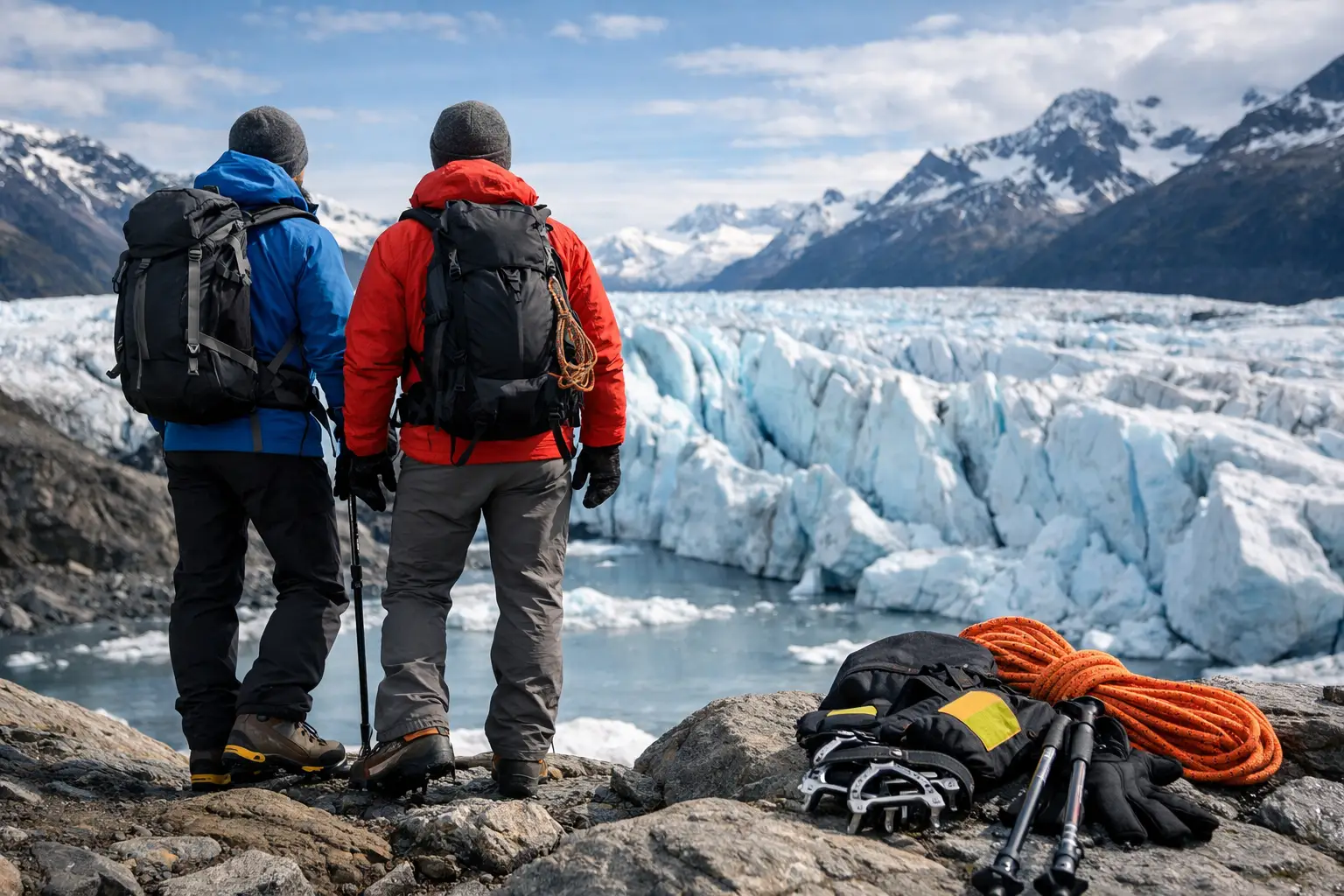
A glacier hike can start with sunshine in the parking area and turn windy, wet, and surprisingly cold once you step onto the ice. That is why so many visitors ask what to wear glacier hiking before they head out. The short answer is layers, sturdy footwear, and a few smart extras. The better answer is knowing how Alaska conditions actually feel so you can stay comfortable, dry, and focused on the experience instead of the temperature.
If you are visiting Southcentral Alaska for the first time, glacier conditions can be a little different from what you expect. Many travelers picture deep winter gear, but that is not always the right call. You are often moving, climbing over uneven terrain, and spending time in cool air that can shift quickly with wind, rain, and changing cloud cover. Dress too heavily and you overheat fast. Dress too lightly and the cold finds you as soon as you stop for photos.
What to wear glacier hiking depends on the day
There is no single outfit that works for every glacier hike. Weather at places like Matanuska Glacier can change by the hour, and the season matters too. A summer glacier outing may still feel chilly because of the ice underfoot and the breeze moving across open terrain. Spring and fall can add more bite, especially when conditions are wet.
That is why layering works better than one bulky jacket. You want the flexibility to adjust without slowing down your day. A good glacier-hiking outfit should keep you warm when you are standing still, comfortable when you are moving, and protected if the weather shifts halfway through the tour.
Start with a base layer that stays dry
Your first layer should be something that pulls moisture away from your skin. Synthetic performance fabric or merino wool both work well. If you start sweating while hiking and that moisture stays trapped in a cotton shirt, you can get cold quickly once the pace slows.
A lightweight or midweight long-sleeve base layer is usually a smart place to start. On warmer summer days, some guests are comfortable in a short-sleeve moisture-wicking shirt under an outer layer. On colder or windier days, long sleeves make more sense from the start.
Cotton is the main thing to avoid. Jeans and basic cotton tees are fine for a city day in Anchorage, but they are not ideal on a glacier.
Add an insulating layer for warmth
Your middle layer is what helps hold body heat. For most travelers, that means a fleece jacket, light puffy jacket, or another warm but breathable layer. The goal is not maximum bulk. The goal is practical warmth that still lets you move easily.
Fleece is often a great choice because it insulates well and stays comfortable even in cool, damp conditions. A light insulated jacket can also work, especially if temperatures are lower. If you tend to run warm, a thinner mid-layer may be enough. If you get cold easily, bring something a little warmer and be ready to adjust.
Finish with a waterproof outer layer
This is where many first-time visitors make or break their comfort level. Even if the forecast looks decent, a waterproof jacket matters. Glacier environments can be windy, and weather in Alaska does not always wait for the forecast to catch up.
A rain jacket or hard-shell layer helps block wind and keep you dry if light rain moves in. Waterproof pants are also helpful, especially when conditions are wet or you may kneel, sit, or brush against icy surfaces. If you do not need them, they are easy to stash or tie around your waist before the hike begins.
The best outer layer is not necessarily your heaviest one. It should be weather-resistant, easy to move in, and roomy enough to fit over your other layers.
The most important gear choice is your footwear
If you are wondering what to wear glacier hiking, start with your feet. Footwear can have a bigger impact on your comfort than almost anything else. Glacier hikes usually involve uneven ground, rocky approach areas, slick spots, and cold surfaces. You want closed-toe shoes or boots with good traction and solid support.
Hiking boots are usually the best option, especially waterproof ones. A sturdy hiking shoe can work on some tours, but flimsy sneakers are not a great choice. Flat-soled casual shoes do not give you much grip, and wet feet can turn a beautiful outing into a long day.
Wool or synthetic hiking socks are also worth it. They add warmth, reduce friction, and dry faster than cotton. Bringing an extra pair is never a bad idea, especially if your trip includes changing conditions or travel before and after the hike.
Some glacier tours provide traction gear or other safety equipment, but that does not replace proper shoes. Think of traction gear as a helpful tool, not a substitute for support and weather protection.
Don’t forget gloves, a hat, and sunglasses
Small items can make a big difference out on the ice. Lightweight gloves are often enough in summer, while insulated gloves may feel better in colder weather. Even when temperatures are not extreme, your hands can get cold from wind and contact with icy surfaces.
A beanie or warm hat is another easy add. If the day warms up, you can tuck it into a pocket. If the breeze picks up, you will be glad you brought it.
Sunglasses are more important than many visitors realize. Sunlight reflecting off ice can be intense, even on cooler days. Good eye protection makes the hike more comfortable and helps you enjoy the scenery instead of squinting through it.
What not to wear glacier hiking
A few common vacation staples are better left behind. Jeans are heavy, restrictive, and slow to dry. Cotton hoodies feel cozy at first but can stay damp and cold. Fashion boots, casual slip-ons, and everyday sneakers are not built for rocky, icy terrain.
It is also smart to skip anything too bulky. A giant winter parka can feel reassuring in the parking lot, but once you start moving, it may be more of a burden than a benefit. Glacier hiking is active. You want gear that works with movement, not against it.
Dress for comfort, not just the photo
Alaska gives you plenty of photo-worthy moments, but comfort should lead the way. That means wearing layers you can walk in, bend in, and keep on for a few hours without fussing with them every ten minutes. If something rides up, traps sweat, or limits your movement, it will be annoying fast.
Neutral outdoor clothing also tends to work best because it handles dirt, moisture, and changing conditions without much concern. You do not need specialty expedition gear for most guided glacier hikes. You just need practical outdoor clothing that can handle a real Alaska day.
A simple outfit that works for many guests
For many summer glacier tours, a strong setup looks like this: a moisture-wicking base layer, a fleece or light insulated jacket, a waterproof rain shell, hiking pants, wool socks, and waterproof hiking boots. Add gloves, sunglasses, and a hat, and you are in very good shape.
If the forecast is warmer, you may wear fewer layers at the start and carry the rest. If it is colder or wetter, keep all three layers ready to go. That flexibility is what makes the system work.
For travelers booking a guided day trip, especially if you are trying to keep packing simple, this approach covers most conditions without overcomplicating things. It is one of the reasons guided glacier experiences are so approachable. You do not need to guess your way through every detail when local insight helps you prepare with confidence.
Final thoughts on what to wear glacier hiking
The right glacier-hiking outfit should help you forget about your clothes once the adventure begins. When your layers fit well, your boots are steady, and your outerwear can handle Alaska’s mood swings, you are free to look up at the blue ice, listen to your guide, and enjoy the kind of day you will talk about long after the trip ends. If you are heading out with Alaska’s Finest Tours & Adventures, a little preparation goes a long way toward making that moment even better.